

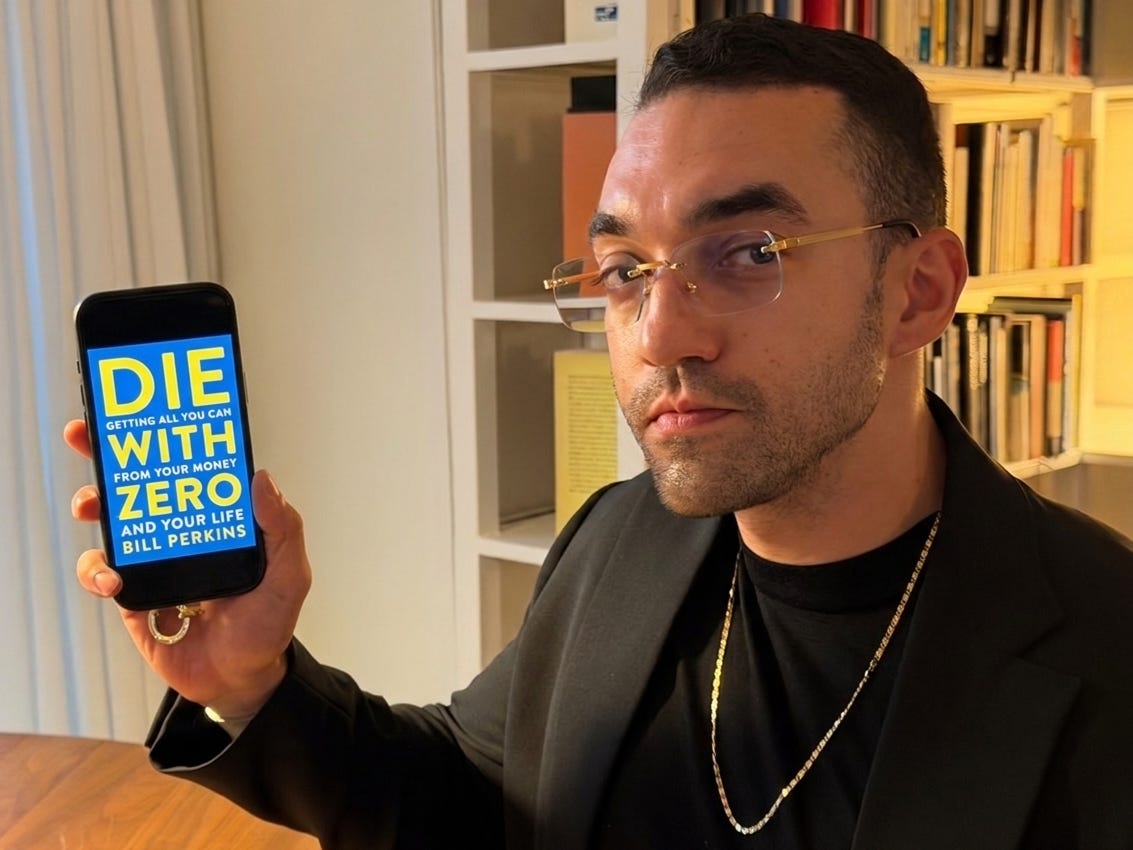
The book in three sentences
The business of life is the acquisition of memories, that’s the whole book for me.
Perkins, with his engineering brain that resonates with who I am, treats life as an optimization problem: maximize fulfillment, minimize waste. Money is only a means to an end. Overextending it quietly sabotages the very thing you were saving for.
We’re more afraid of running out of money than of wasting our lives, and that has to flip. Health is the multiplier on every experience, and it only ever declines, so timing an experience to the right age matters as much as affording it.
Why I Picked It Up
Andrea mentioned this book ages ago, and it’s been sitting on my backlog for a while. I finally opened it on my way to Oslo earlier this year and finished while landing in London, book number six of this year’s Goodreads challenge.
The timing of this book hit the sweet spot for me. A few months after Legend gets acquired as a unicorn, a five-year journey building and optimizing digital products, observing the business take market share. It's always been a dream for me to work on a public company; I just never imagined it would be this way. Holding more financial freedom than I’d ever had, Perkins put plain words to a feeling I’d been circling, the point of all that saving was never the pile, so what’s the point? I needed guidance and I found.
Memories pay dividends
Perkins is an engineer by training, like myself, and he frames the whole thing as an optimization problem: maximize fulfillment, minimize waste, like I tend to do in most projects I get involved in.
Experiences yield dividends because we humans have memory. I don’t just buy the trip and book hotels, it's that and every time I’ll ever recall it, every time I’ll open Instagram stories, every time I get the photos app notification of what I was up to last year.
Just like I preach for the stock market, invest early and the tail of those dividends runs longer, which is the quiet case for spending on experiences in your twenties rather than your forties.

I think about my collection of birthday adventures, the helicopter flight over Dubai, that Tokyo Omakase seat at Sushi Tou, the night in the Qatari desert, the photoshoot night in Hong Kong.
All memories that I won’t ever forget, the money spent is a lost afterthought as nostalgia becomes this unique emotional factor as I grow older, to me one of the most powerful human emotions.
Morgan Housel lands in the same place from another door. In The Art of Spending Money, he calls good memories the closest thing we have to living for today while compounding for tomorrow.

Know your peak
Here’s the part that stings and got me thinking of my first US adventures in my early 20s. An experience isn’t worth the same at every age.
Perkins borrows the retirement planner’s vocabulary: go-go years, slow-go years, no-go years. The same trip at forty and at seventy are not the same trip. Health is the multiplier on every experience, and it only ever moves one way. So the three things a great experience needs — money, health, and free time — almost never line up at once. Young, you have time and health but no money. Later, the money arrives and the health has quietly slipped.
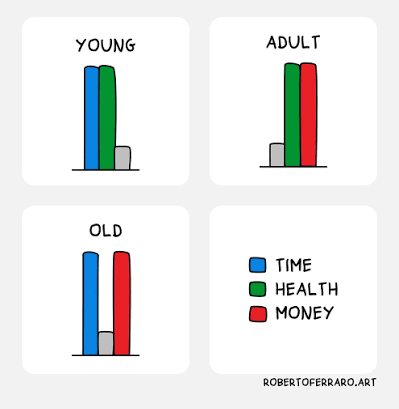
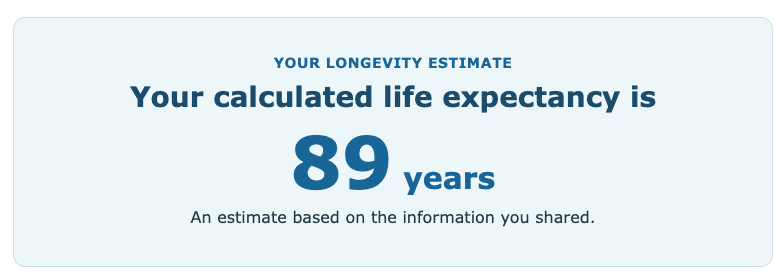
Being an engineer, Perkins doesn’t leave it poetic. He points to a net worth peak, for most people somewhere between 45 and 60, after which you deliberately start spending it down. To find yours, you need two uncomfortable numbers: your annual cost of simply staying alive, and your projected death date. I did all the math, it's eye-opening. For life expectancy, he recommends liveto100.com, go check it out.
Morgan Housel offers a kinder version of the same exercise. Write your own obituary first, the one you’d actually want read out, then work backward and live up to it.
Seneca got there two thousand years earlier, and he was blunter about it: postponement is the greatest waste of life.
The fool is always getting ready to live.
The business of life
Strip away the annuities and the net-worth curves, and here’s what Perkins is really arguing: your life is the sum of your experiences, full stop. Everything you do adds up to who you are, and when you look back, the richness of those experiences becomes the only ledger that counts.
It’s also why I’ve spent years calling my own version the ABCs of a good life, my wrapper for the business of living.
Associate yourself with good people, and good things will happen.
Become one percent better every single day.
Capture memories worth remembering.
Dying with zero is really a book about time, about spending your finite life energy on the things that become memories.
Things I keep doing because of this book
Run the uncomfortable math. I keep a few death-date and burn-rate scenarios in my Life as a Product diary, so “spend it down” has actual numbers behind it.
Invest in experiences early. The memory dividend compounds, so my twenties and thirties are the highest-leverage years to spend on them.
Spend on health now. Preventive effort keeps the multiplier high for longer and makes every future experience richer.
A Note from me
I’m the target reader for this book, and I felt seen on nearly every page. The saver who needs permission to spend, the one for whom making money quietly became more thrilling than living. A few months past my five-year journey to an exit, with more freedom than I’ve ever had, the timing couldn’t have been sharper.
What I take from Perkins now is balance, spending on what I actually value in the present while still saving just enough for later with no intentions to go from this to a better one leaving money behind.
Am I getting it right? I think, finally, I am.
What to Read Next
Dying with zero sounds morbid until you sit with it. Really, it's the most life-affirming math I know: save enough to be free, then find the courage to convert that freedom into memories before the window narrows. It's the same thread I pull in Time Is All We Have, where the arithmetic of a finite life gets its fuller treatment.
Sources of Wisdom
Perkins, B. 2020. Die With Zero.
Housel, M. 2025. The Art of Spending Money.
Seneca. On the Shortness of Life.