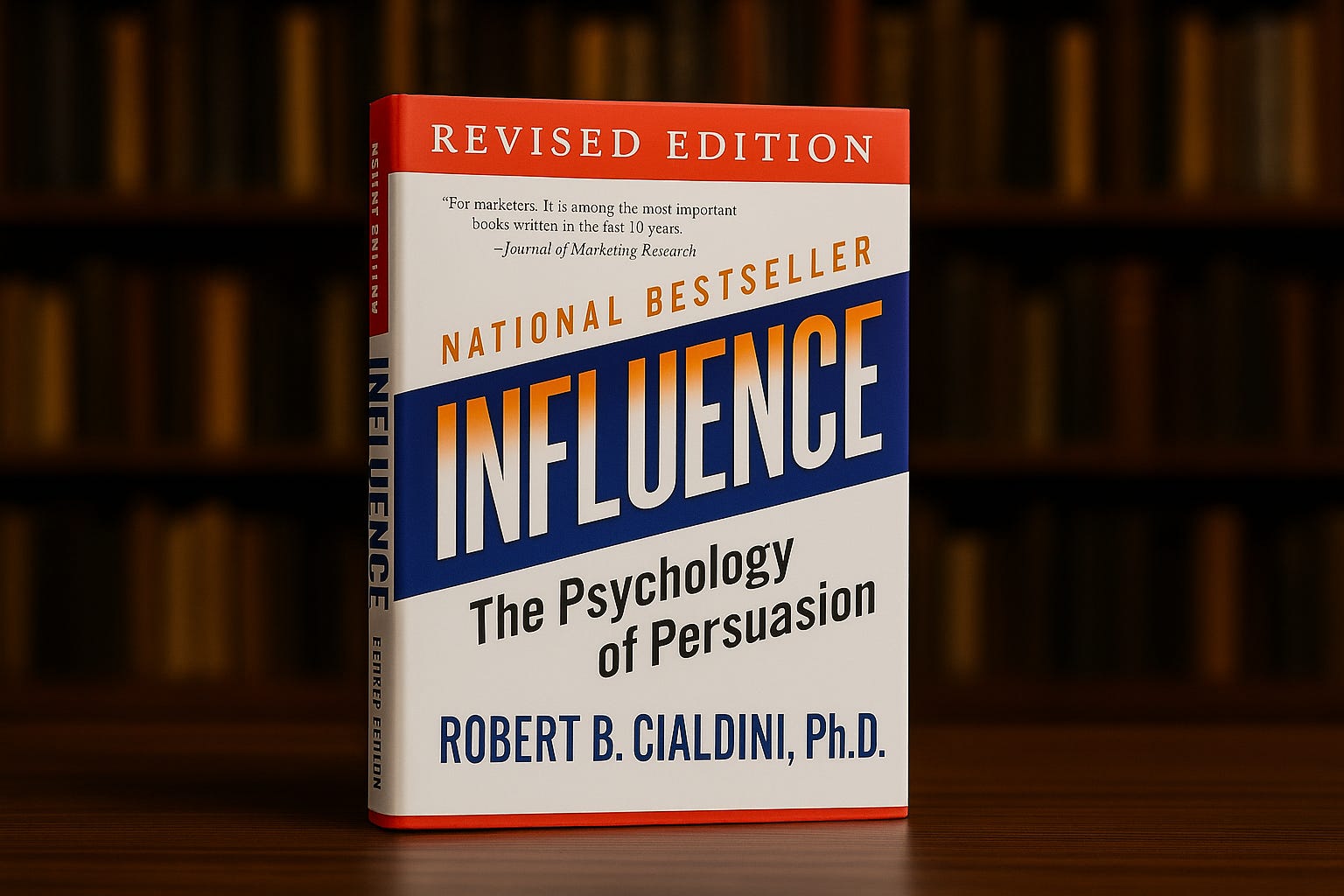
The book in three sentences
People rely on psychological shortcuts — known as the six principles of influence— to make decisions faster.
These principles are powerful tools of persuasion, often used automatically and subconsciously.
Understanding them helps you both become more persuasive and protect yourself from manipulation.
Why I Picked It Up
It kept coming up. Whether we were interviewing product leaders, startup founders, or marketers, people would reference "Cialdini's work" like gospel.
It’s structured like a behavioral playbook for influence. You learn one psychological principle at a time, with vivid real-world examples. It's one of those books that changes how you notice things—ads, conversations, negotiations.
These were the three things that stayed with me:
The Six Shortcuts to Influence
Applying It Ethically
Spotting Influence in the Wild
The Six Shortcuts to Influence
Cialdini identifies six core principles that people use to make quick decisions:
Reciprocity: We feel obligated to return favors.
Commitment & Consistency: We want to stay true to our previous decisions.
Social Proof: We follow what others are doing, especially in uncertain situations.
Authority: We defer to those who appear knowledgeable or credible.
Liking: We’re more likely to agree with people we like.
Scarcity: We value things more when they seem limited.
Each principle taps into automatic behavior—mental shortcuts that help us navigate complexity but also leave us vulnerable to manipulation.
Applying It Ethically
These six principles don’t just work in sales or marketing. They show up everywhere—from product design to fundraising to parenting.
Here’s how I’ve seen them used well:
Offering reciprocity with upfront value before a signup.
Using commitment nudges like onboarding checklists.
Featuring authentic testimonials and social stats.
Framing advice with expert voices or credentials.
Writing with warmth and relatability.
Creating urgency ethically, not manipulatively.
Understanding these levers doesn’t mean you have to pull them all the time. But knowing they’re there gives you more intention and control.
Spotting Influence in the Wild
Once you read Influence, you start seeing these psychological shortcuts everywhere:
The free sample at the grocery store (Reciprocity).
The limited-time-only discount (Scarcity).
The expert on TV in a lab coat (Authority).
The “People Also Bought” section (Social Proof).
Cialdini doesn’t just teach you how to use influence—he gives you the tools to resist it too. This makes the book as much a defense manual as it is a strategy guide.
A Note from Me
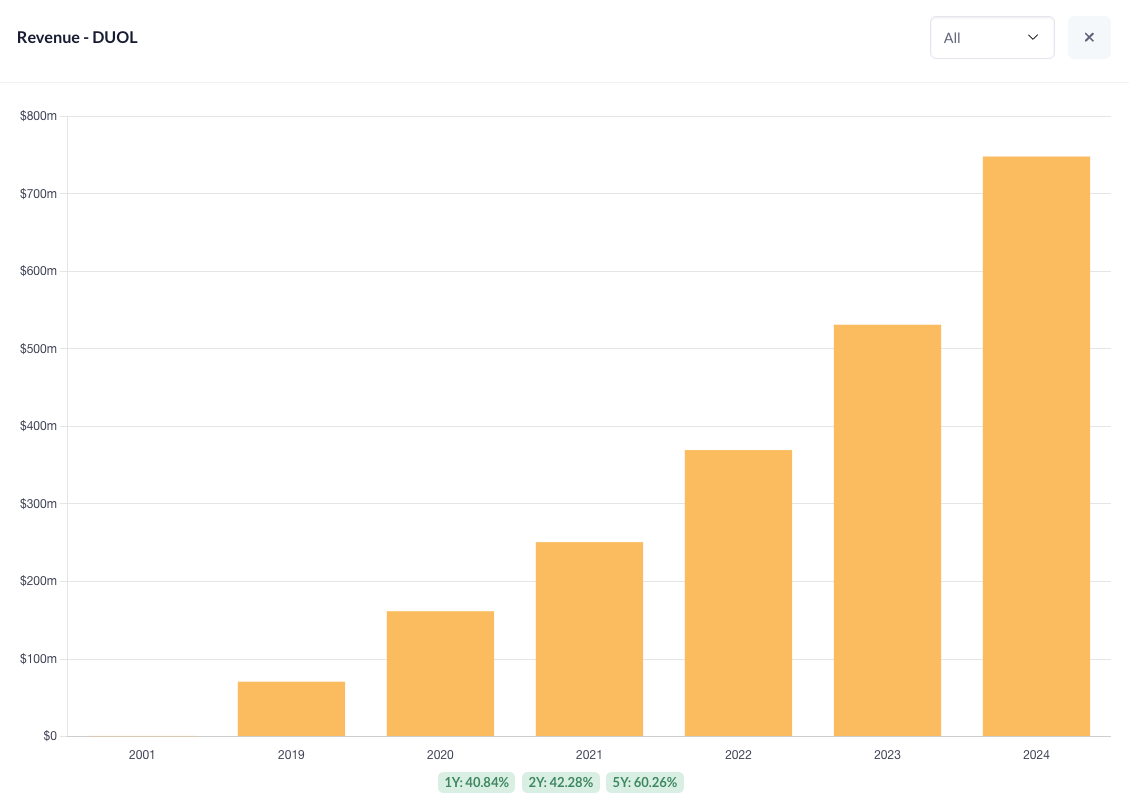
Once you’ve seen these principles, you can’t unsee them. They’re everywhere. But one app that truly stands out for using all of them—often at once — is Duolingo ($DUOL).
Here are just a few of the ways I’ve seen Duolingo applying Cialdini's influence principles in the product:
Reciprocity – It gives you value immediately with lessons and streaks, often before asking you to pay or commit.
Commitment & Consistency – The daily streak mechanic builds a habit and nudges you to keep your word to yourself.
Social Proof – Leaderboards show what others are doing, and push notifications tell you how you're ranking.
Authority – The owl delivers tips and encouragement like an expert guide, often using structured learning paths backed by linguistics.
Liking – The app’s tone, mascot, and animations build an emotional connection. It’s friendly and unhinged.
Scarcity – Limited-time XP boosts, streak freezes, and seasonal badges add urgency and scarcity in a lightweight way.
What to Read Next
Check the summary for The Mom Test, the most recommended Product book.
You start noticing how influence is everywhere. And once you see it, you can’t unsee it.