The scene
Sabi is not one restaurant, but a lineage. Roger Asakil Joya built the Sabi Sushi chain out of Stavanger, and then built the thing that made the name mean something: Sabi Omakase, a counter on the edge of the city that in 2017 became the first sushi restaurant in Norway ever to take a Michelin star. It has held it every year since.
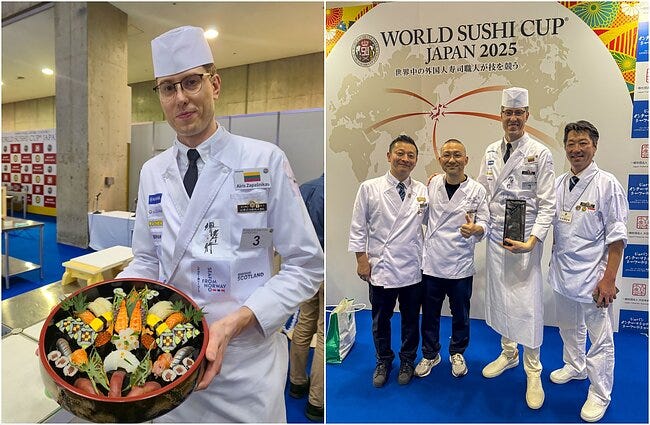
Oslo is the second act, and the more interesting one. Airis Zapašnikas was born in Kaunas in 1992 and apprenticed at a sushi restaurant in his own hometown before taking an offer to move to Norway, where he trained under Joya and Vladimir Pak. He took over Sabi Omakase Oslo as executive chef and general manager in 2022. The room had a Michelin star within a year. In 2025, he went to Tokyo and won the World Sushi Cup, the first Lithuanian ever to do it, and told the press afterward that the title mattered more to him than the star did.
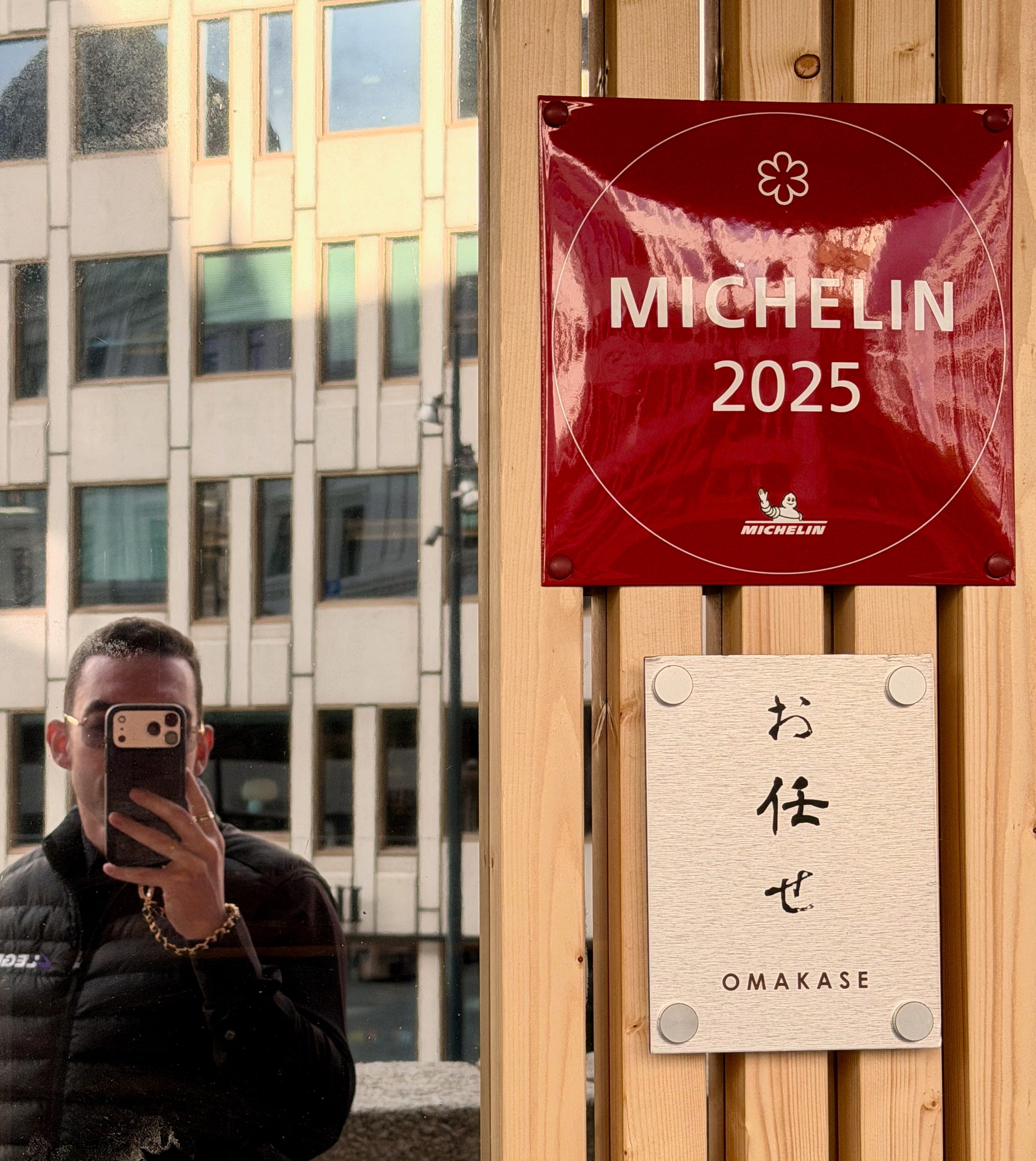
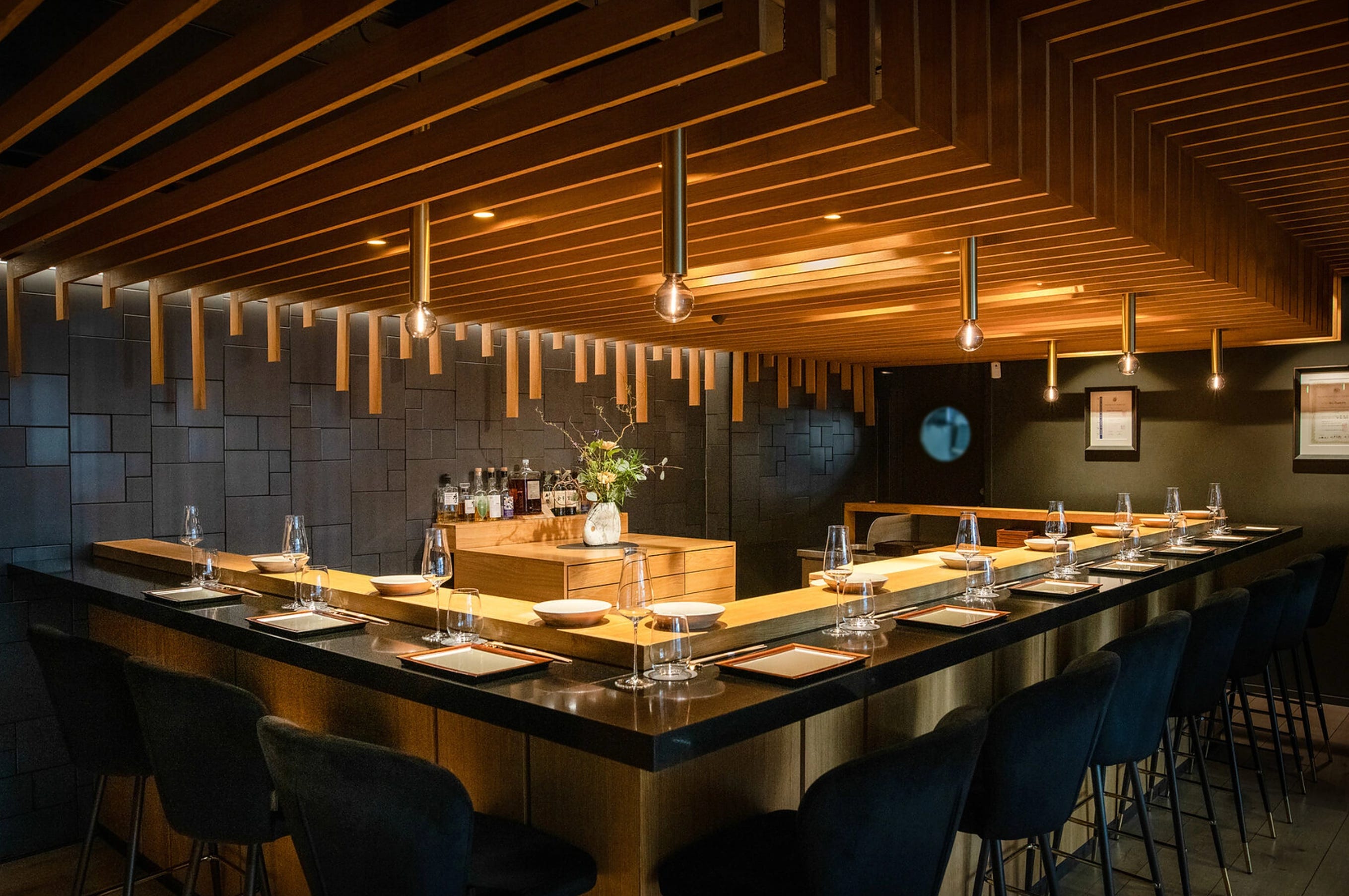
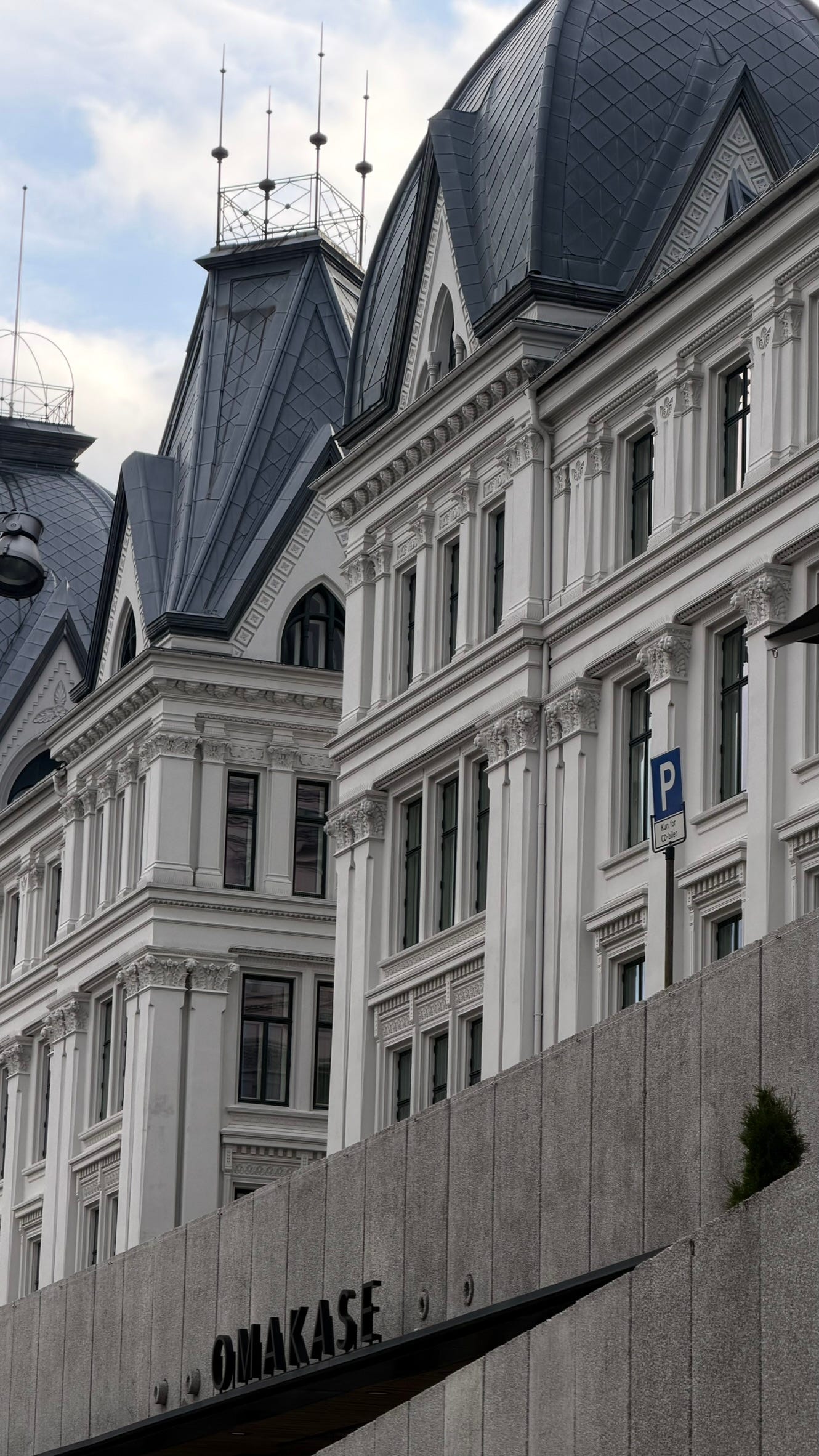
The room itself gives away nothing. A Victorian block in Sentrum, OMAKASE lettered above the door, and an entrance that is essentially a mirror with the Michelin plaque beside it. No dining room. Eight seats, one counter, and the kitchen is the wood directly in front of your hands. Edomae technique — the Tokyo method, aged and cured and pressed rather than merely sliced. Twenty courses. Six pours. A little over three hours.
I was in at eight and out at twenty to eleven, and walked into a bright evening. Oslo does that in late spring, and after three hours of low light and close attention, it is genuinely disorienting.
What brought me there
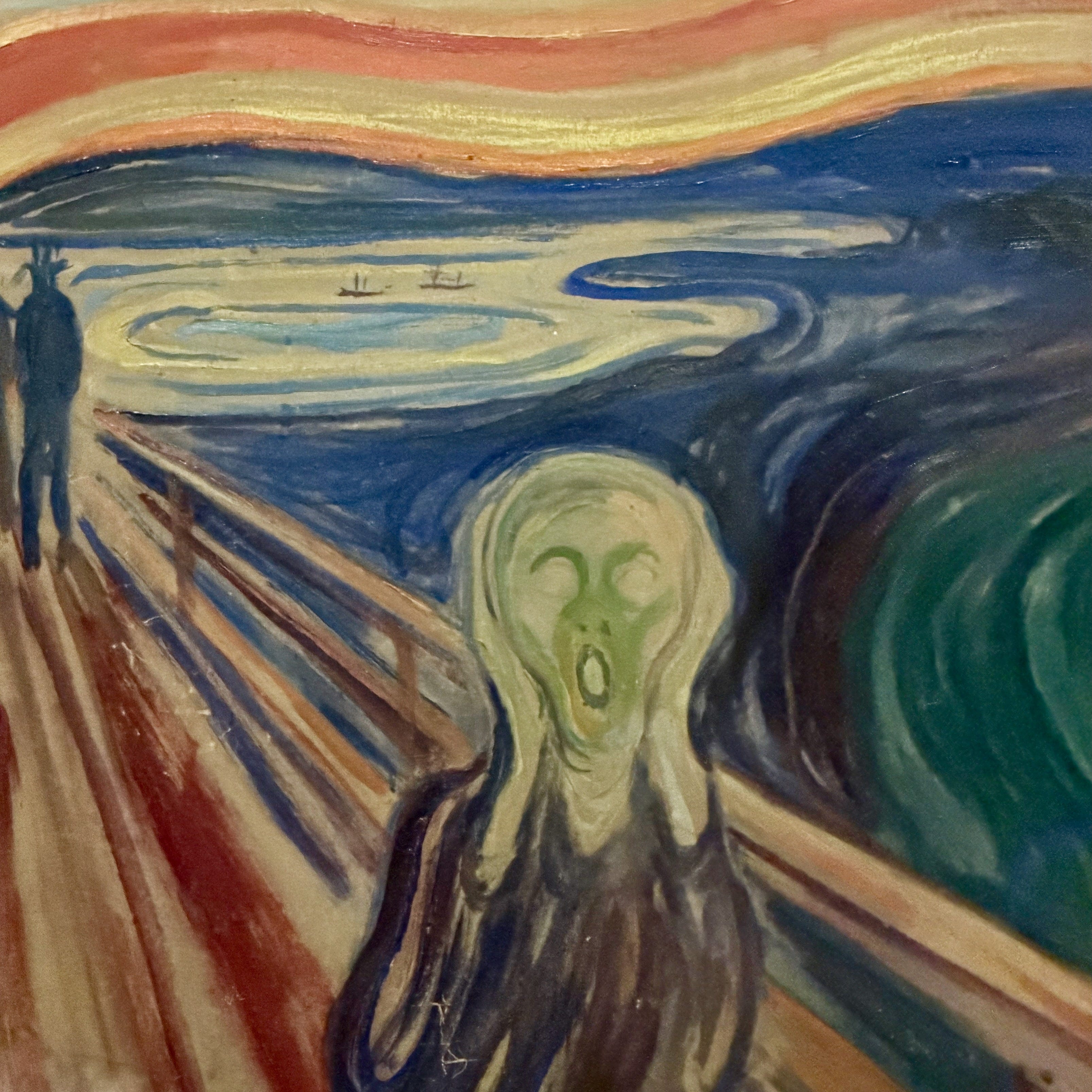
I found Sabi while browsing the Michelin app planning a two nights Oslo visit on the way home back from meetings in London. Two nights in Norway’s capital, a bike tour, the Munch Museum, and the omakase highlight.
See something, eat something, walk eight kilometres, my recipe for successful traveling days, it worked out like a charm.
I first fell in love with the omakase experience at Noriko in Wrocław, Marcin’s corner, which later moved to Warsaw's Praga neighborhood. Then I raised the bar during the most special Think Week Japan edition, which permanently set a new scale for me. Sushi Tou is my bar, and it is not a fair one. Everything since has been measured against a room I will probably never match again.
The food
Twenty courses is a structure, and tuna the backbone, of course.
Baby tuna early, then lean, medium-fatty and fatty. The fat ladder, walked properly — you taste the gradient across the night rather than one showpiece slice.
The lobster was not a dish so much as a piece of theatre with a dish at the end of it. Broken down live, in front of us, the whole process visible before a single plate existed. It fascinates me every time.
The monkfish liver came on blue-and-white porcelain with a dab of wasabi. Ankimo has never been my thing; this was very good regardless.
Through the middle: turbot, halibut, squid, mackerel, razor clam, langoustine. Not all of it Nordic, either — the chef told us the tuna comes from Tarragona. Nothing dragged.
The Polish Oscietra caviar, banked thick on nori and arriving with the Krug, was the most extravagant thirty seconds of my year. Caviar and champagne is not an original idea. Executed at this level, in a room this small, it does not have to be.
The eel was the summit. It usually is, for me, and here it was the single best thing on a very long list of good things, the piece where Edomae stops being a description on a website and becomes the reason the fish tastes like that.
And then the rice. I did not enjoy the taste of it, and it never quite matched the fish, I cannot describe it better than that, and I have been turning it over for weeks. The fish is the half you photograph, the rice is the half that takes twenty years. Noriko’s has made me stop mid-bite. Tou’s rearranged what I thought sushi was. This did neither, and that is the whole distance between a four and a five.
It closed the way the old rooms close: futomaki, tamagoyaki, miso soup, and a strawberry daifuku folded by hand in front of us. A kitchen that has spent three hours demonstrating restraint finishing on something warm and slightly childish is a good instinct.
Hospitality
Omakase is a learning session. Attention to detail, technique perfected over years of training, one bite at a time, texture, aroma, and ingredients you would not otherwise meet. That is the omotenashi of it, and it is why anyone sits at a counter instead of a table.
Jan Markiewicz was our chef that night, and the only one: twenty courses, one pair of hands, 26 years old and Polish. Jan was friendly and professional throughout, and there is clearly a bright career ahead of him — I hope to stay in touch.
The service was excellent by every measurable standard: well-paced, technically immaculate, never hurried and never hovering.
The other half of an omakase counter is the strangers sitting on it, and Sabi’s crowd was worth having. Small rooms self-select. You end up talking to the people either side of you because there is nowhere else to look, and I still follow people I met at counters years ago.
The scorecard
Food 4: the tuna, the eel and the caviar course are all fives; the rice never was
Service 4: immaculate, well-paced, great pairing explainers; the bar for a five at this level is Tokyo
Atmosphere 5: eight seats, comfortable lighting, minimal and elegant
Overall ★★★★☆
The artful critic
Here is the question I actually walked out with, and it took a week of reading to answer: how does a restaurant hold a Michelin star through a change of chef?
Because Sabi has now done it twice, in two cities. Joya starred Stavanger in 2017 and still holds it. Zapašnikas arrived in Oslo in 2022, having trained under Joya, and starred that room inside a year. And on the night I ate there, neither of them was in the room, but a young chef alone, and the technique never wavered.
The instinct is to read that as a warning sign, but might've been the opposite. Of course I would love to have experienced Airis’ work, but Michelin stars the room, not the person, and a group that can produce two starred rooms in two cities with different hands at the counter has solved the hardest problem in hospitality: consistency across locations. That is not a chef being brilliant. That is a training system, a sourcing chain, and a standard that survives the individual. The same problem a product org has when something that works in one market has to work in three, and usually gets solved by shipping a diluted version and hoping nobody measures it.
Sabi did not dilute it. The Oslo room is not a franchise of the Stavanger room, it is the same craft in a different pair of hands, and the guide agreed within twelve months.
Which leaves the honest verdict. A system that reliably produces excellent also reliably produces familiar. Everything at Sabi was superb and nothing at Sabi surprised me. I have eaten this shape before, and the thing that makes the operation so impressive from a distance is exactly the thing that flattens it up close. Consistency is the moat and it is also the ceiling.
Would I come back? Not sure, because I question the value for money. One star means worth a stop during a trip, best cooking in its category and it might very well be for Norway. It's just that €460 for the full coursed and mixed pairing buys a faultless version of something I can get elsewhere, Noways put a higher premium for the experience.
Four stars, and the fifth may just have been held back by the rice.
“I do the same thing over and over, improving bit by bit… I’ll continue to climb, trying to reach the top, but no one knows where the top is.”
— Jiro Ono