

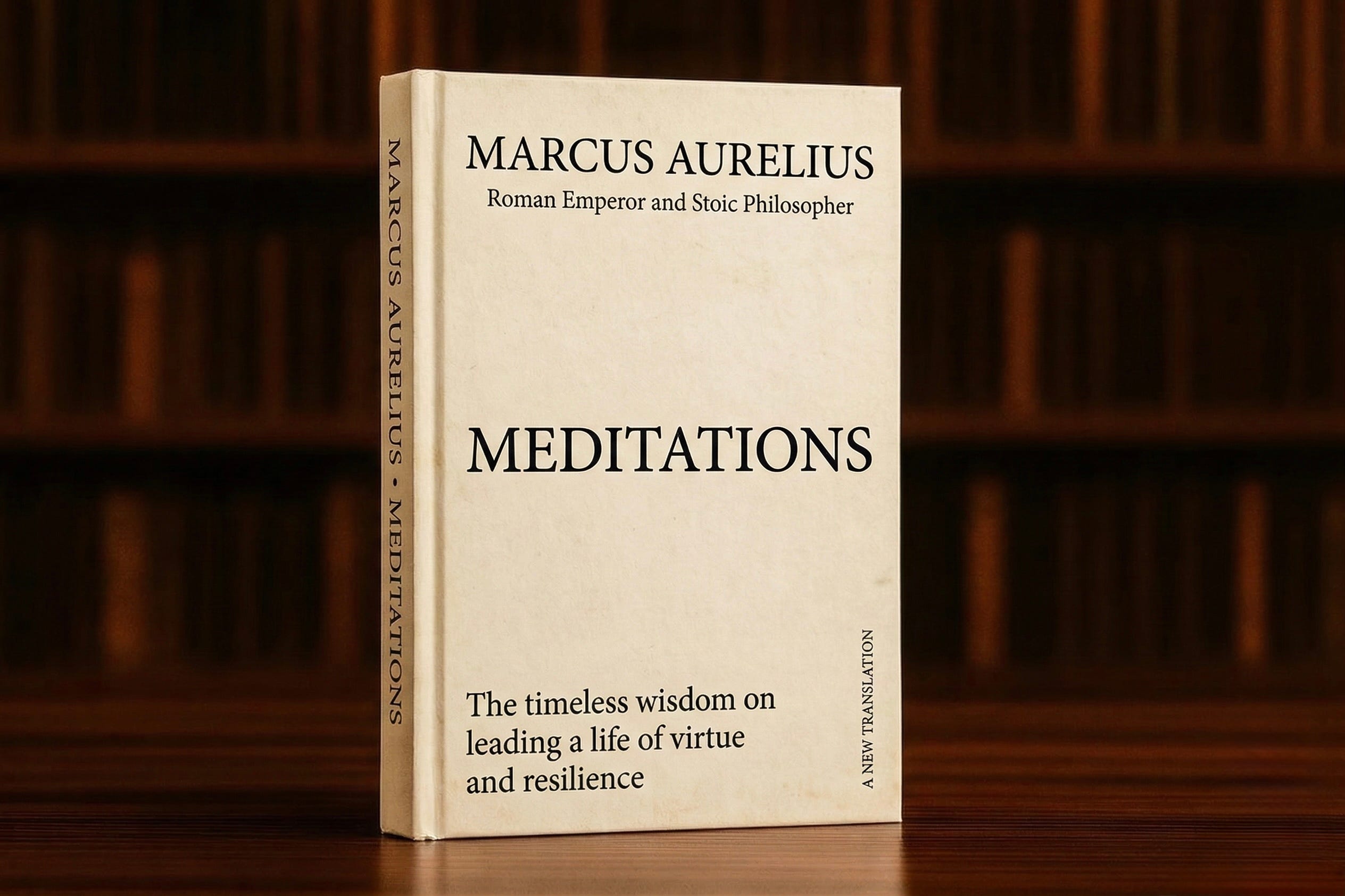
The book in three sentences
Written as a private journal by the Emperor of Rome, the most powerful man of his era, who never intended it to be read, Meditations is an honest leadership manual, a daily practice of self-correction, perspective, and discipline that has survived nearly two thousand years.
Three ideas keep showing up, page after page: the people around you shape who you become, you can find stillness anywhere if you train your mind, and death isn't a threat, but a reminder to pay attention.
Not a book of advice, but a man arguing with himself to stay good, present, useful, and his honesty and vulnerability make it timeless.
Why I Picked It Up
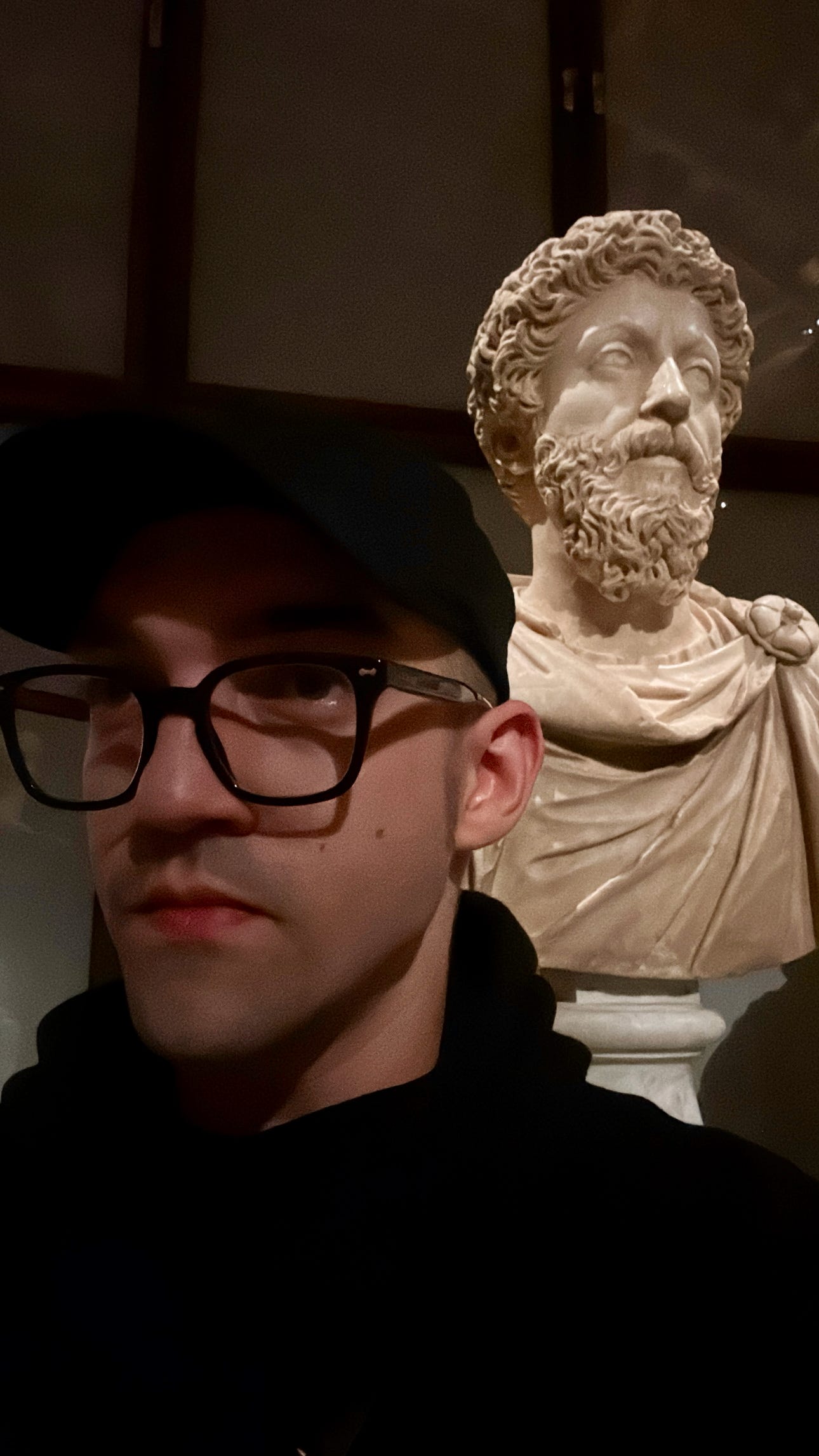
I first came across Marcus Aurelius while visiting museums around the world, where tour guides often referenced his power and his meditations. Once stoicism picked up steam in Silicon Valley, I returned to his character through quotes from Ryan Holiday’s Daily Stoic until the name became unavoidable.
At work, every time I bring up stoicism with senior leaders, Meditations is the first title they reference, and even though most haven’t read it fully, they all respect what it represents.
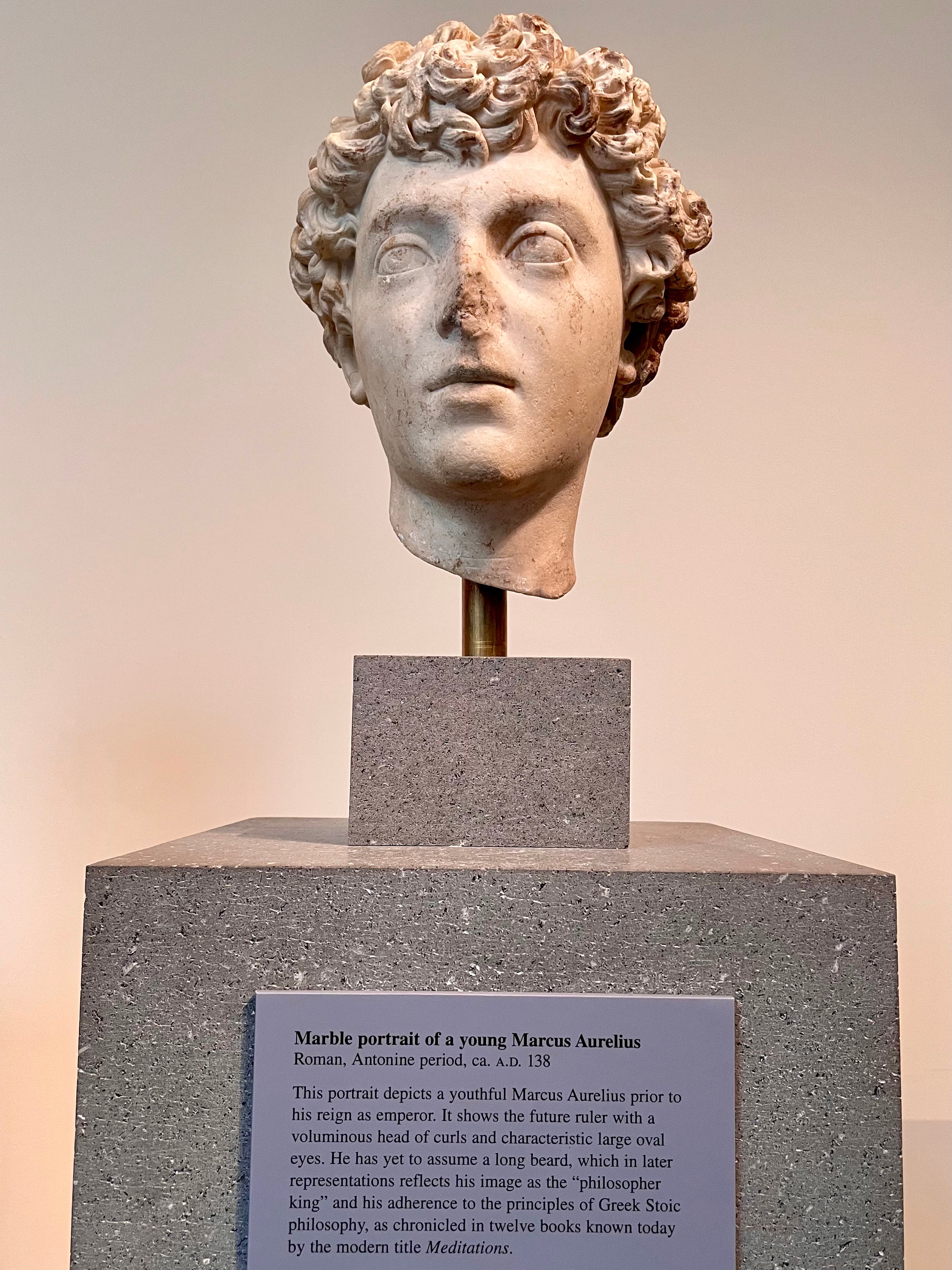
Think about that for a moment. We have the personal thought journal of the most important man of his time. The Emperor of Rome, writing to himself, never expecting anyone to read it. And nearly two thousand years later, executives in boardrooms are still citing it. Together with the Gospel of John, Meditations feels like one of those evergreen pocket books I can always come back to.
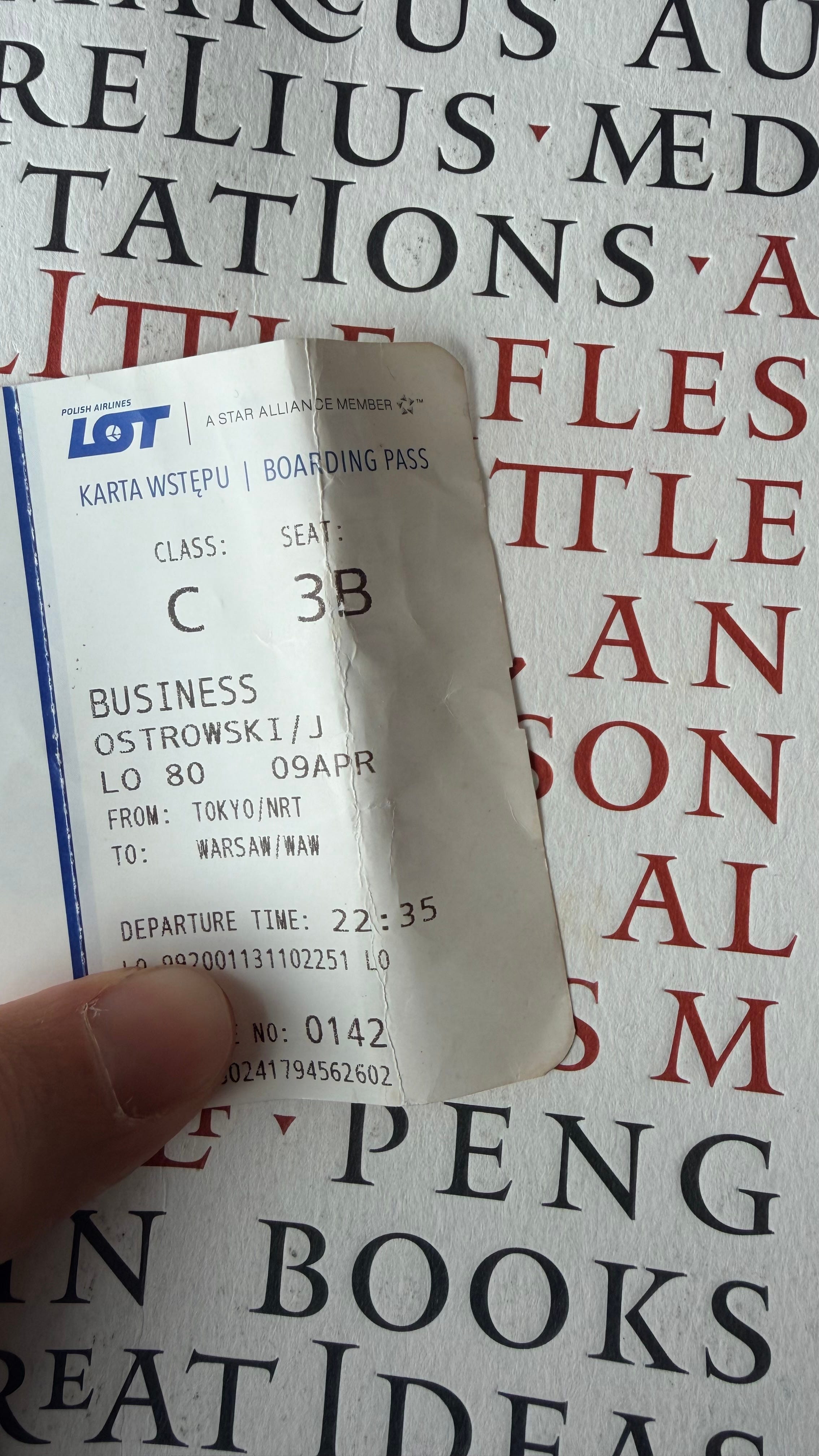
I read most of it on my long flight from Warsaw to Japan for my 30th birthday, with a physical copy in hand and a pen for underlining. These were the three things that stayed with me:
The Leadership Manual Hidden in Book One
Discipline Equals Freedom
The Stoic Growth Engine
The Leadership Manual Hidden in Book One
The entire first book of Meditations is unlike anything else in philosophy. It’s a gratitude list. Marcus Aurelius, the most important man of his time, opens not with grand ideas, but by naming every person who shaped him — and what specifically he learned from each one.
From his grandfather: composure. From his mother: generosity and simplicity. From his tutor: to mind his own business and never listen to gossip. From Rusticus: to read accurately, not settling for the general idea. From Apollonius: to make decisions independently instead of depending on chance. From Maximus: self-control, dignity, and cheerfulness under adversity. What struck me most was how specific the attributions are.
His exercise motivates us to take note of and praise those who shaped our lives and careers.
Craig Sullivan, who taught me that no design survives first contact with users.
Bart Bobrowski for being mindful of what we test when building product.
David Sanchez for his lessons on prioritization when the juice is worth the squeeze.
Mike Funderberk, who cross-pollinated hospitality into how business is done.
David Gouray, who contextualized leadership as the one who provides clarity of vision, foresees the steps ahead and considers how the next generation should look.
Nick Kisberg, the CEO I most admire, who I learned to be an advocate for the aggregation of marginal gains.
My father, who guided my youth through example, looked back each day, being sure the very best was done.
And for all the mentors I never met, but got their guidance through their written thoughts, the giants I don't get tired to stand in the shoulders.
We rarely pause to map those debts. Marcus Aurelius did it as his first act of philosophical reflection, which tells you something about his priorities: before you can lead others, acknowledge who led you.
One line I underlined twice — the Alexander the Platonist lesson about not overusing the words “I am too busy.” No one should shirk the obligations due to society on the excuse of urgent affairs. I think about this one often.
Discipline Equals Freedom
The middle books of Meditations are where it shifts from gratitude to daily combat, Marcus arguing with himself about how to think, how to act, and how to stay grounded.
The passage I keep coming back to is from Book Four: you don’t need a beach house or a mountain retreat to find peace. You can retire within yourself at any moment. Nowhere can a man find a quieter or more untroubled retreat than in his own soul.
I love this one because it creates an internal contradiction with my own life, the Think Week ritual, where I force myself outside my routine to get exposed to different cultures, different people, different horizons. Here, the Roman Emperor tells me this is futile, that I must be strong to find that inner space for reflection within me, anywhere, any time. Maybe it’s all a learning curve. Maybe the external retreat is training wheels for the internal one. I’m still working that out.
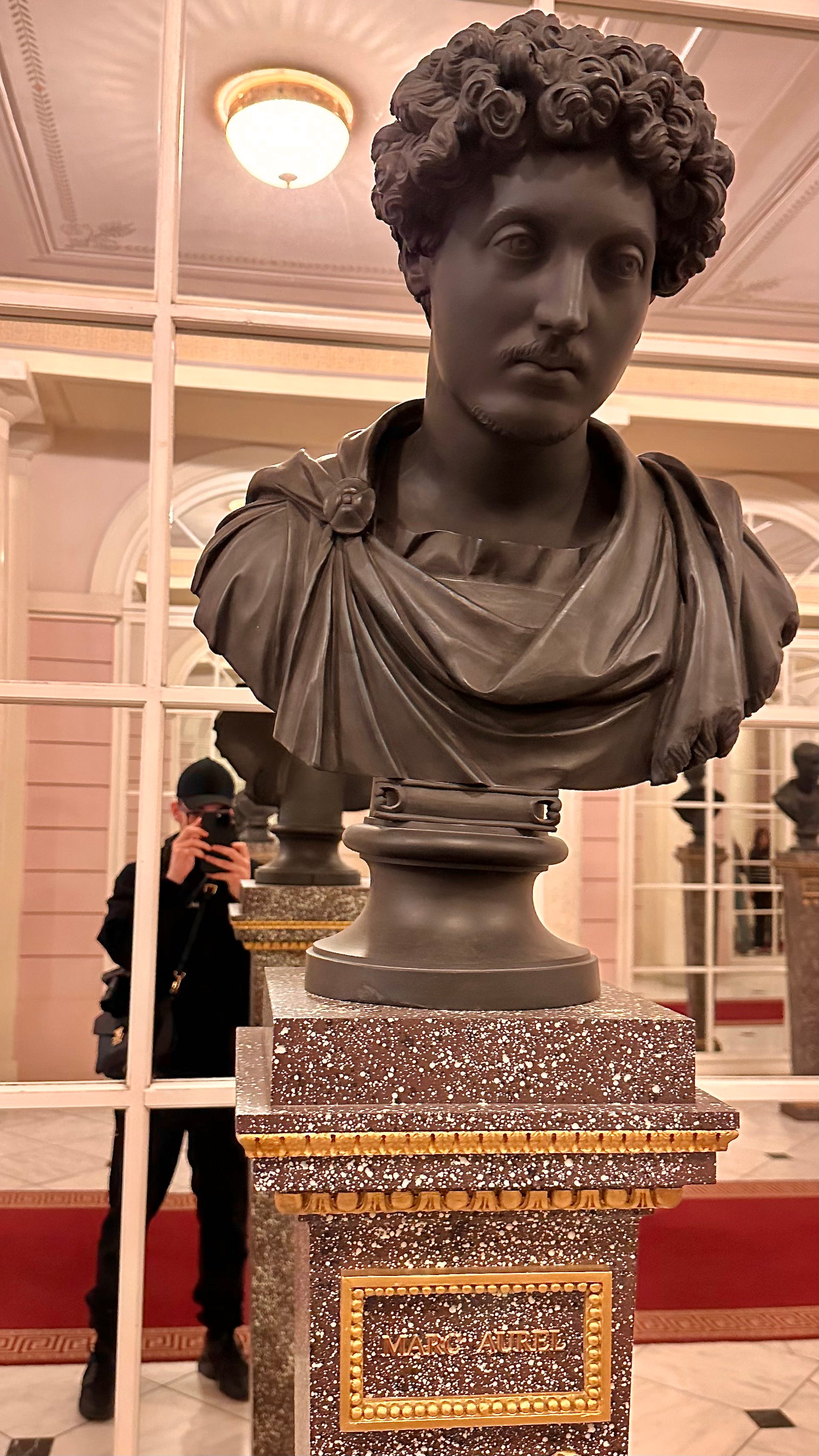
Discipline is the root of all good things, at the gym, discipline is visible; you either show up or you don’t. In the mind, discipline is invisible. It’s choosing not to spiral. It’s choosing not to speculate about what someone else is doing or thinking. Marcus calls this out directly: wondering about others is a loss of opportunity for our own work.
Three mental discipline moves he returns to across multiple books:
Your mind becomes what it habitually thinks about. He writes about the soul being dyed by its thoughts. Fill your mind with what serves you. I’ve seen this play out in investing — the portfolio you build reflects the mental models you feed yourself, not the hot takes you scroll past.
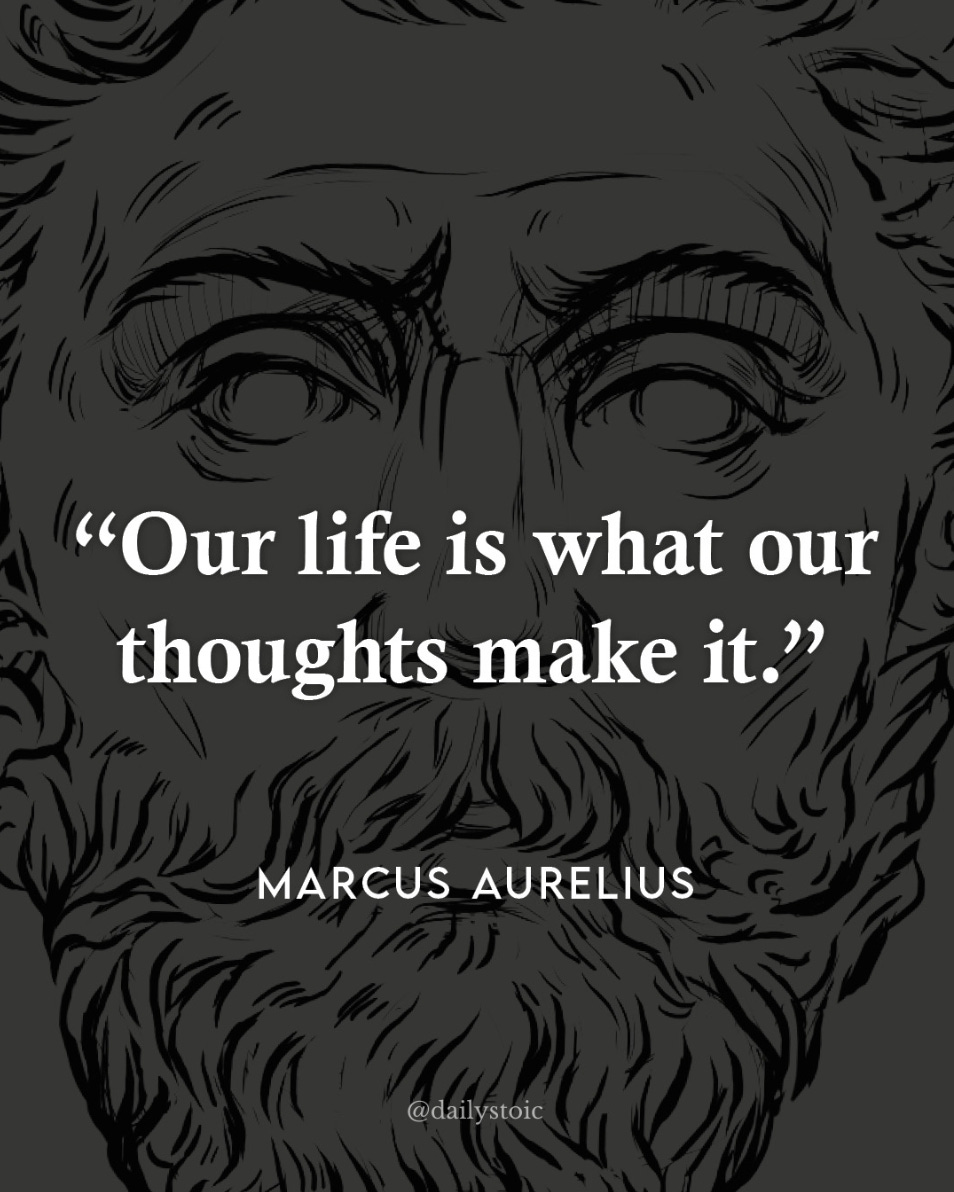
You don’t have to have an opinion. Marcus says everything becomes what your opinion makes it. Renounce the opinion, and you find calm. Where I'm not knowledgeable or simply don't have any particular interest, I reserve my right to have an opinion, passing without forming a judgment. Many people today feel they must have a sharp take on every topic, every headline, every debate in a world full of controversial topics where omission can be an offense. Marcus would call that voluntary suffering.
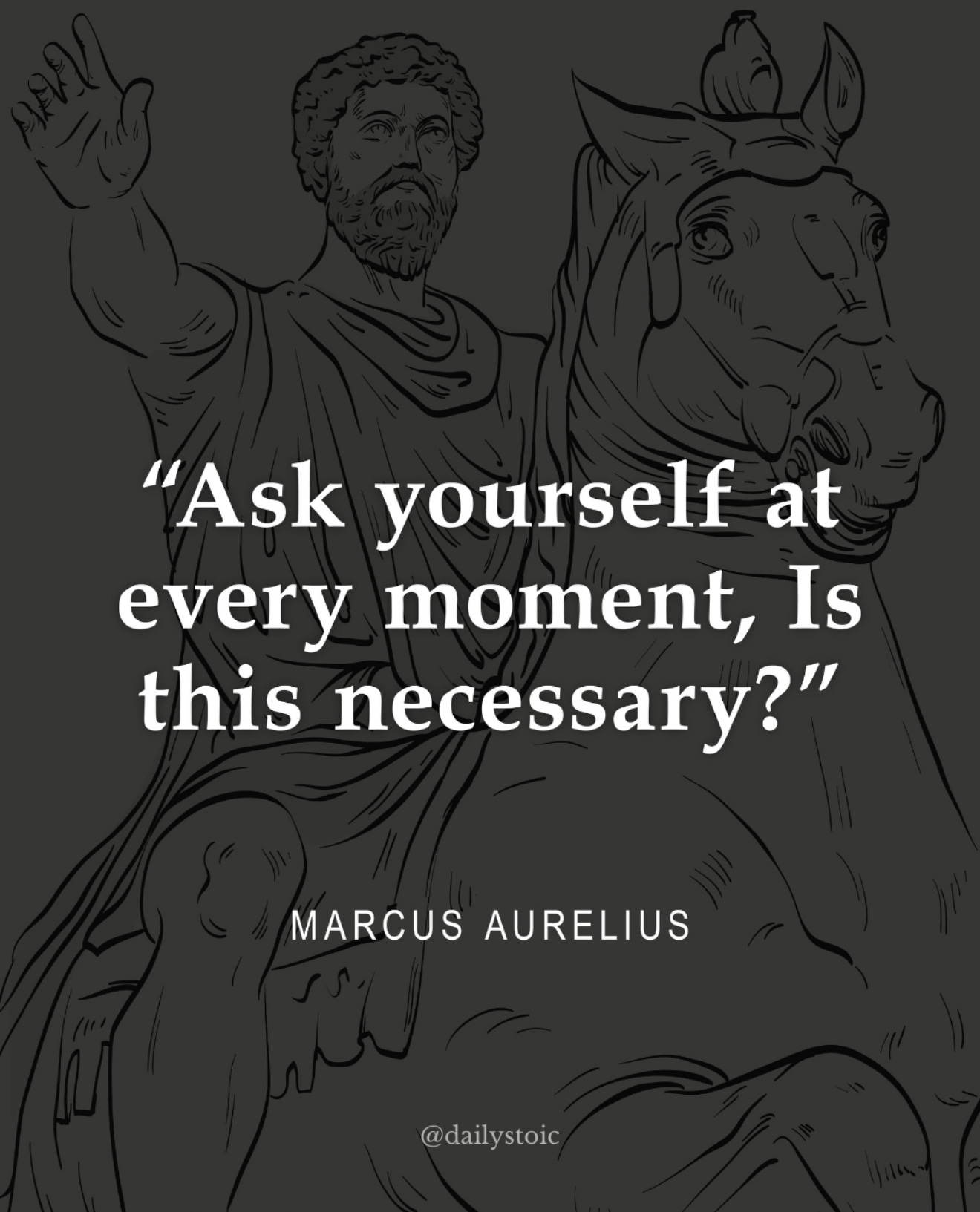
Do only what is necessary. Most of what we say and do is unnecessary. The wise person asks of every action: Is this essential? I think about this every time I look at a product roadmap. The best products aren’t the ones with the most features. Simple is kind.
The Stoic Growth Engine
A quote from Chris Bailey’s Productivity Project I carry when pondering the future: happiness is nothing more than coming to terms with how things change. A recurring idea across Meditations — everything is changing, everything is temporary.
The stoics had a name for this: memento mori. Remember that you will die. It sounds heavy, but Marcus doesn’t use it to depress you. He uses it to wake you up, to remind us that time is all we have. He puts it plainly: live not as though there were a thousand years ahead of you. Fate is at your elbow. Make yourself good while life and power are still yours.
The beautiful tension in Meditations is that Marcus fully acknowledges how brief and small our lives are — he writes about mortal life being a little thing, lived in a little corner of the earth — and yet he never uses that as a reason to stop trying. He uses it as a reason to be more present, more deliberate, more alive. Memento mori isn’t about fear, but gratitude for the time you have and the urgency to use it fully, without being too hard on yourself for the imperfections along the way. It's only one life, we gotta make it count, and it has to be fun because it's already too serious to take it seriously.
The better every day foundation lies right here, in a book written two millennia ago. Compounding only works if you believe that today actually matters. Marcus gives you that belief: today is all you have. The present instant is the only moment you actually occupy. Everything else is either memory or speculation.
A Note from Me
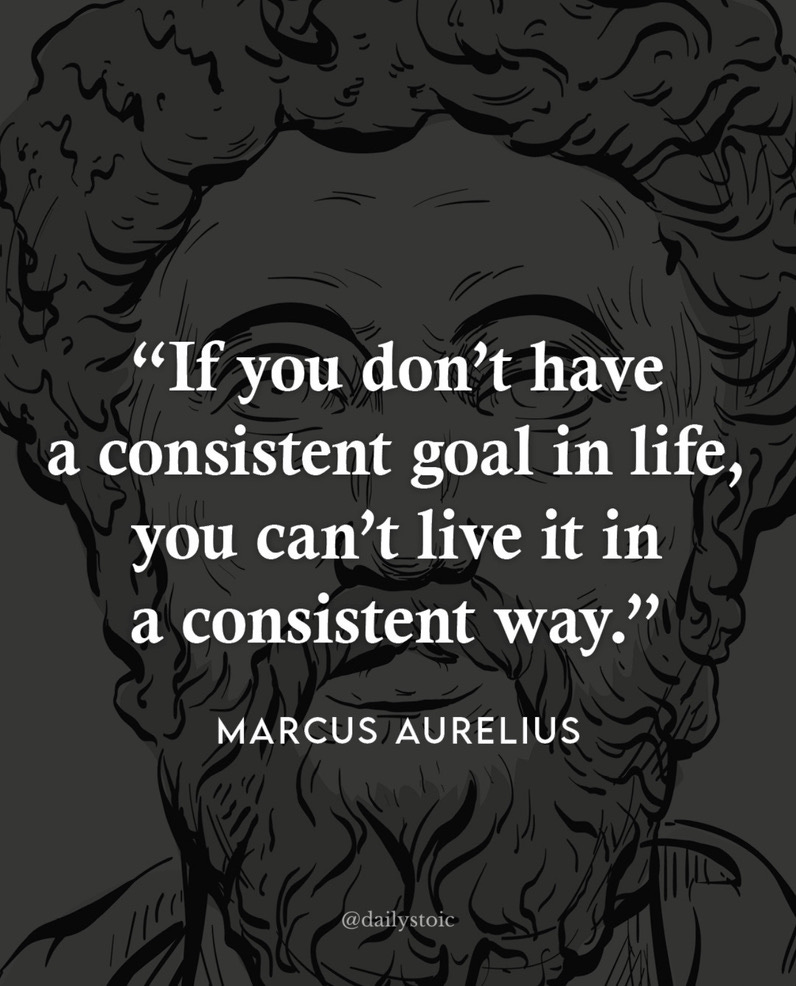
Meditations meet you exactly where you are. It met Marcus Aurelius in the middle of running an empire. It met me at 30,000 feet, building something meaningful, striving to be 1% better than yesterday.
The Stoics don’t promise you won’t feel pain. They promise that if you do the work, the daily reps of perspective, discipline, and presence, you can carry it well.
And that might be enough.
What to Read Next
Check the summary for Supercommunicators, a book about mastering the art of connection through deep questions and active listening.
A man should habituate himself to such a way of thinking that if suddenly asked, “What is in your mind at this minute?” he could respond frankly and without hesitation.